How to De Risk a Software Licensing Migration
Replacing a software licensing system can feel risky because licensing is closely connected to the application and its customers. Existing licenses need to remain valid, customers need to retain the access they purchased, and the new system needs to work across the environments where the software is deployed.
A migration does not have to involve an immediate cutover, however. A phased approach can allow teams to validate the new licensing infrastructure while keeping the existing system available.
Start With the Existing Licensing Environment
Before implementing the replacement system, document how licensing works today.
This should include the licensing models in use, customer entitlements, activation workflows, license data, application integrations, and any special cases that have accumulated over time.
It is also important to identify requirements that are easy to overlook, such as offline customers, customer specific licensing rules, or older product versions that still depend on the existing system.
Understanding the current environment makes it easier to determine what actually needs to be migrated.
Separate Data From Licensing Logic
A licensing migration normally involves two different types of work.
The first is the business data that needs to be recreated, such as customers, products, entitlements, subscription status, and existing license ownership.
The second is the technical implementation, including license creation, validation, activation, and application integration.
Keeping these separate makes the migration easier to plan and test. License data can be transformed and recreated through APIs, while the application integration can be developed and validated independently.
Automation can also reduce the amount of manual work involved in recreating large numbers of licenses. Devolens provides license automation capabilities for connecting licensing operations to other systems and workflows.

Build and Test Before Migrating Customers
The new licensing system should first be integrated and tested without affecting production customers.
Test the scenarios that matter in your actual product, including successful activation, expiration, changed machines, different entitlements, and failed validation.
Deployment requirements should also be tested early. If customers operate without reliable Internet connectivity, for example, the new architecture needs to support those environments. Offline licensing can allow applications to validate licensing information without requiring continuous connectivity.
The objective is to identify problems while the existing licensing system is still fully operational.
Run the Systems Side by Side
A migration does not necessarily require an immediate switch from the old system to the new one.
Running both systems during part of the migration allows the team to validate the new implementation with selected customers while retaining a working fallback.
This can provide:
- Controlled testing with real customers
- Gradual customer migration
- Time to identify unexpected licensing behavior
- A clearer rollback path
- Reduced risk during the initial rollout
The exact implementation depends on the existing architecture, but parallel operation can make a significant difference when licensing is already critical to production software.
Migrate a Small Group First
Once the new system has been tested, start with a limited group of customers or products.
Choose customers that provide useful coverage of the environments and licensing models you need to support. This can expose problems that were not visible during internal testing without immediately affecting the entire customer base.
Monitor activation, license validation, support requests, and other relevant signals during this stage.
Only expand the migration once the new implementation has demonstrated that it works as expected.
Plan for Rollback
A migration plan should define what happens if a problem is discovered after customers have started moving to the new system.
The rollback process should be understood before the migration begins. Depending on the architecture, this may involve continuing to support the old licensing system for customers that have not yet migrated or temporarily returning selected customers to the previous workflow.
The important part is that the team does not have to design its response during an incident.
Migrate Customers Progressively
After the initial migration group has been validated, customers can be moved progressively.
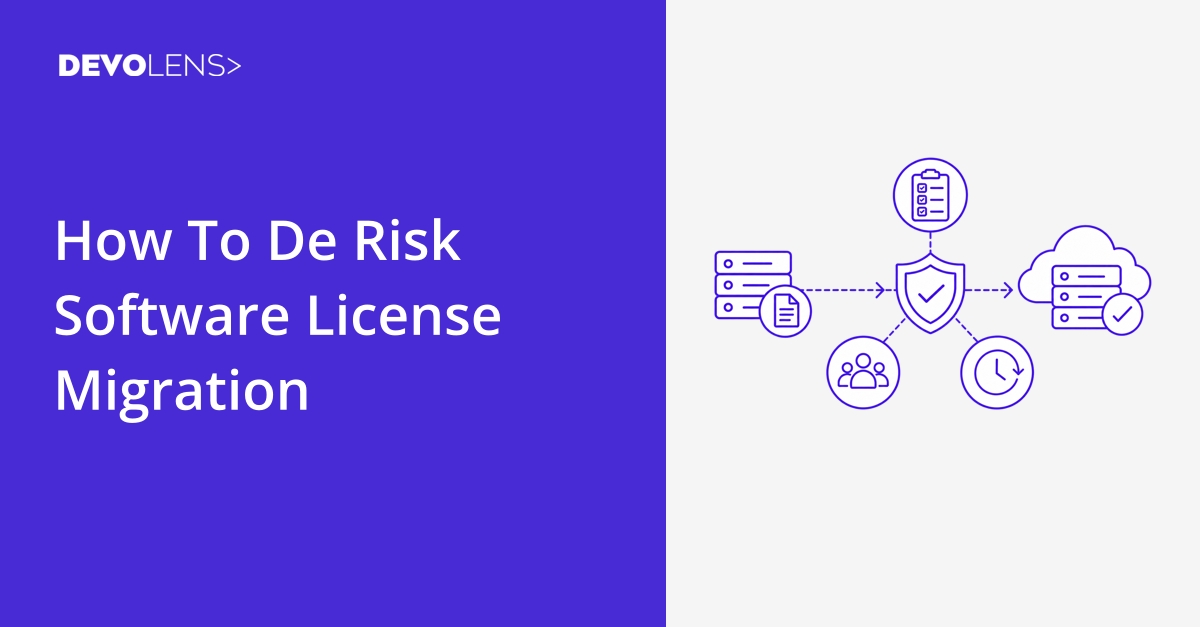
A typical migration can follow this sequence:
- Establish the new licensing environment.
- Recreate or import existing license data.
- Integrate and test the application.
- Run the new and existing systems in parallel where appropriate.
- Migrate a limited group of customers.
- Monitor the results.
- Expand the migration gradually.
- Retire the legacy licensing workflows once they are no longer required.
This approach reduces the number of variables changing at the same time and gives the team opportunities to correct problems before they affect a larger customer base.
Avoid Changing Everything at Once
A licensing migration is often a good opportunity to improve licensing architecture, introduce new licensing models, or automate existing workflows.
However, making too many changes simultaneously can make the migration harder to validate.
If possible, first reproduce the licensing behavior that customers already depend on. Once the migration is stable, additional improvements can be introduced separately.
This makes it easier to distinguish migration problems from changes in the underlying licensing model.
Use a Structured Migration Plan
The biggest migration risks are often caused by uncertainty rather than the underlying technology.
Teams need to know what is being migrated, how customers will be affected, how the new system will be tested, and what happens if something goes wrong.
Our whitepaper on migrating from an internal licensing system to Devolens provides a more detailed migration readiness framework, including what needs to be migrated, common migration triggers, parallel operation, and a practical migration approach.
For teams that want additional assistance, Devolens Professional Services can also provide support with licensing implementation, migration, and more complex requirements.
A licensing migration does not need to be a single high risk event. By planning the transition, validating the new system before customers are affected, running systems side by side where appropriate, and migrating progressively, software companies can reduce disruption while moving toward a more maintainable licensing infrastructure.
Get Started with Devolens
Deploy licensing with a leading software licensing provider without long implementation cycles or added operational overhead.