How to Implement Software Licensing in Java
Adding software licensing to a Java application involves more than generating a license key. A production licensing system needs to determine whether a license is valid, associate licenses with the appropriate machines or installations, and enforce the features or usage limits associated with each license.
For many applications, these requirements can be implemented through a licensing SDK rather than building the entire licensing infrastructure from scratch.
What Does Software Licensing Code for Java Need to Do?
The exact implementation depends on how your software is distributed and how customers are expected to use it. A typical Java licensing implementation needs to handle several responsibilities.
License Activation and Verification
The application needs to communicate with the licensing system and determine whether a license is valid. This can include checking the license status, expiration date, and other properties relevant to your application.
If you are new to software licensing, our guide on how software licensing works explains the main components involved in a licensing system.
Machine or Installation Binding
If licenses should only work on a limited number of machines or installations, the application can provide a machine code when activating the license. This allows the licensing system to keep track of which environments are using a license.
Entitlement Enforcement
A valid license does not necessarily mean that every feature should be available. Your application can use information from the license to determine which features, editions, or usage limits apply to the customer.
Handling Connectivity Requirements
Some applications can always communicate with the licensing service, while others need to continue operating when connectivity is unavailable. The appropriate licensing architecture depends on the deployment environment.
Using a Java Licensing SDK
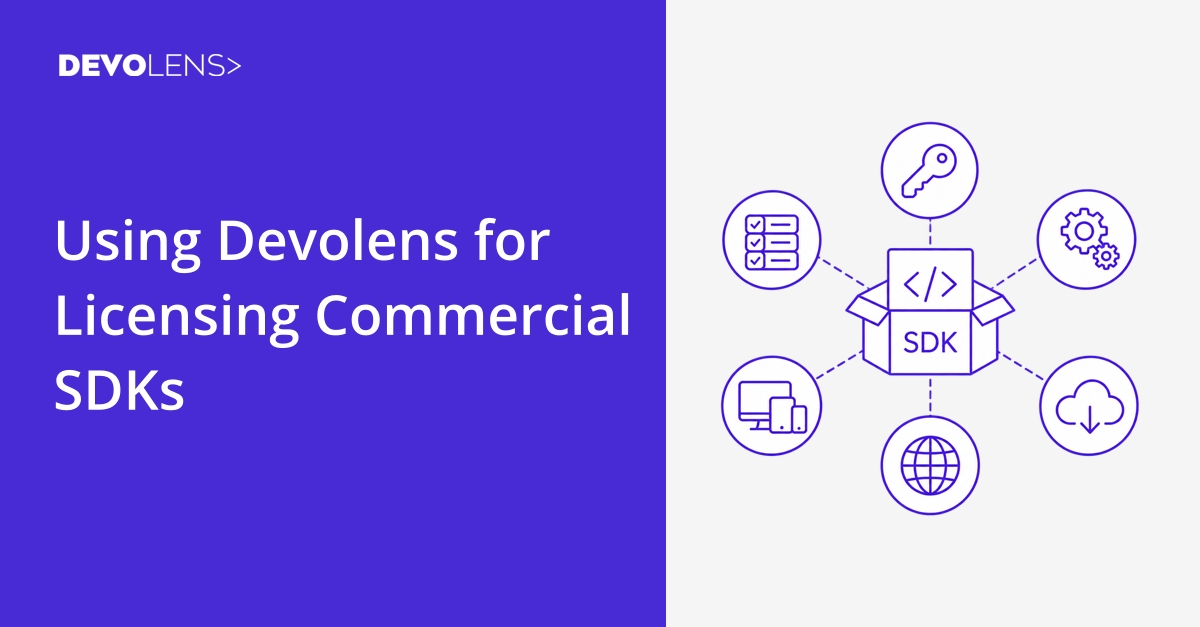
A licensing SDK provides the application with the functionality required to communicate with the licensing service without requiring you to implement the underlying API integration yourself.
Devolens provides a Java SDK for integrating licensing into Java applications. The SDK handles communication with the licensing service and provides functionality for activating and working with licenses from within the application.
For a typical application, the integration consists of adding the SDK to the project, configuring the required licensing credentials, and calling the activation method when the application needs to establish or verify a license.

Implement License Verification in Java
A basic Java implementation can activate a license and then use the returned license information within the application.
import io.cryptolens.methods.Key;
import io.cryptolens.models.LicenseKey;

public class LicensingExample {
    public static void main(String[] args) {
        String token = "YOUR_ACCESS_TOKEN";
        String rsaPubKey = "YOUR_RSA_PUBLIC_KEY";

        LicenseKey license = Key.activate(
            token,
            rsaPubKey,
            1234,
            "AAAAA-BBBBB-CCCCC-DDDDD",
            "YOUR_MACHINE_CODE"
        );

        if (license == null) {
            System.out.println("License is invalid or could not be activated.");
        } else {
            System.out.println("License is valid.");
        }
    }
}
The exact product ID, license key, access token, and RSA public key are specific to your Devolens account. The access token used by the application should have only the permissions required for the operations it needs.
The SDK also provides access to information associated with the activated license, which can then be used by the application when enforcing licensing rules.
For a more general overview of the implementation process, see our guide to implementing a software licensing system.
Enforce Features and Entitlements
License verification is only one part of the implementation. Your application also needs to decide what a customer can do after a license has been verified.
For example, you may have different editions of your Java application where some functionality is only available to customers with a particular entitlement. The application can inspect the relevant license information and enable or disable functionality accordingly.
This approach keeps the commercial rules associated with a license separate from the core application logic. You can therefore change which customers receive a feature without having to create a separate version of the application for every license type.
The same principle can be used for trials, subscriptions, usage limits, and other licensing models. Devolens provides capability guides covering these different licensing approaches.
Choosing a Machine Code for Java Applications
Machine binding can be useful when a license should only be used on a specific machine or a limited number of installations.
The Devolens Java SDK provides functionality for working with machine codes that can be supplied during activation. The licensing service can then use that identifier when applying machine activation limits.
The right approach depends on the type of application. A desktop application, server application, virtual machine, containerized deployment, and development environment may have very different definitions of what constitutes a machine.
It is therefore worth deciding what you actually want to restrict before enabling machine locking. In some environments, installation based or user based licensing may be more appropriate than tightly binding a license to a physical machine.
Handling Licensing in Production
A development implementation can often be reduced to a single activation call. Production systems need to consider what happens when the licensing service cannot be reached, when a license expires, or when customers operate in restricted environments.
For applications that require continued operation without an internet connection, Devolens supports offline licensing using signed license data. A license can be retrieved while connected and subsequently validated locally without contacting the licensing service.
This can be particularly relevant for Java applications deployed in environments with restricted internet access, customer networks, or other infrastructure where continuous access to an external licensing service is not practical.
For more demanding offline deployments, such as restricted or air gapped customer environments, a license server can provide a centralized licensing endpoint inside the customer's network. Devolens License Server explains this architecture in more detail.
A Practical Approach to Java Software Licensing
For most Java applications, the implementation can be kept relatively small:
- Define what the license controls, such as access, features, installations, or usage.
- Create the corresponding products and licenses in the licensing system.
- Add the Java SDK to the application.
- Activate the license when appropriate and verify the returned license information.
- Enforce the relevant entitlements in the application.
- Decide how the application should behave when connectivity is unavailable.
- Test the licensing flow in the same deployment environments used by customers.
The important part is not the number of lines of licensing code. It is making sure that the licensing behavior matches how the software is actually distributed and operated.
Conclusion
Implementing software licensing in Java does not require building every part of a licensing platform yourself. A licensing SDK can handle communication with the licensing service while your application remains responsible for deciding how verified licenses affect access and functionality.
For simple applications, this may only require activation and entitlement checks. More complex products can build on the same foundation with machine locking, trials, subscriptions, usage based licensing, or offline deployments.
Get Started with Devolens
Deploy licensing with a leading software licensing provider without long implementation cycles or added operational overhead.