Floating Licenses Explained: How Concurrent and Seat-Based Licensing Works
Floating licenses are one of the most common licensing models used in commercial software, especially for desktop applications, engineering tools, SDKs, and other products sold to teams.
They allow multiple users to share access to software in a controlled way, making them ideal for seat-based pricing and organizational deployments.
This article explains how floating licenses work, how they differ from node-locked licenses, and when they make sense from both a business and technical perspective.
What Is a Floating License?
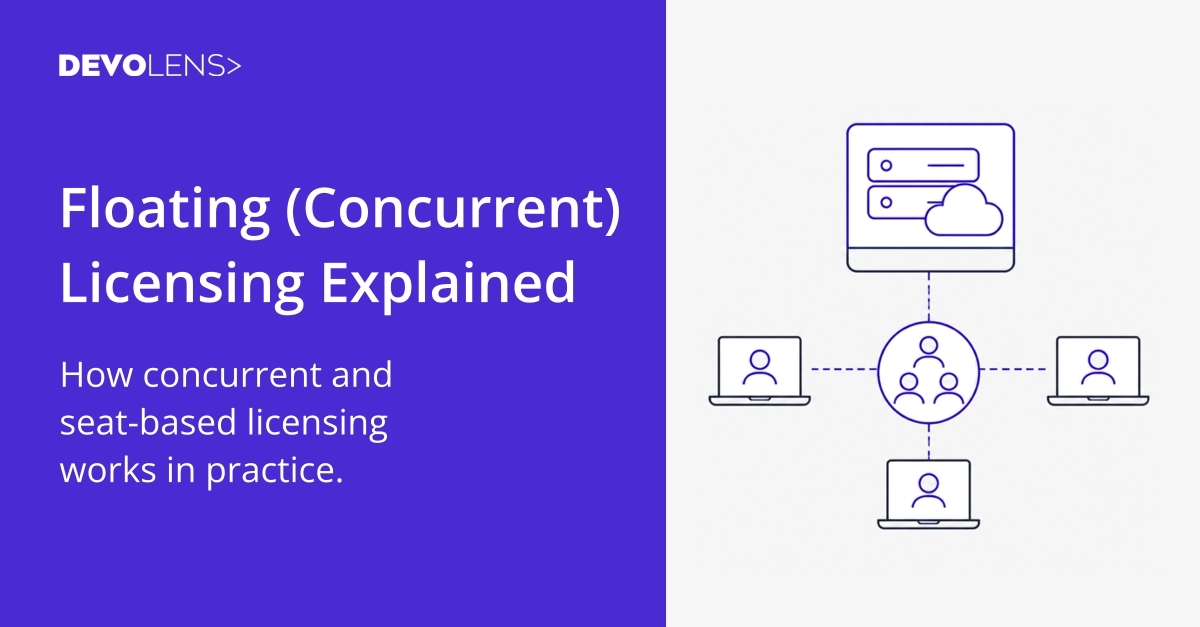
A floating license (also called a concurrent license) allows a fixed number of users to access the software at the same time, regardless of how many devices the software is installed on.
Instead of assigning licenses to individual machines or users, the licensing system enforces a limit on how many active sessions can exist concurrently.
For example:
- A company purchases 10 seats
- The software can be installed on 50 machines
- But only 10 users can actively use it at the same time
When the 11th user tries to start the software, access is denied until a seat becomes available.
This makes floating licenses a natural fit for seat-based pricing models.
How Floating Licenses Work Technically
Floating licenses rely on a central authority, typically a license server or licensing platform, to track active usage.
When the application starts, it:
- Sends a request to the licensing system
- Checks whether a seat is available
- Grants access if the concurrent limit is not reached
- Reserves a seat while the software is in use
When the application closes or disconnects, the seat is released and becomes available to another user.
This ensures that access is enforced consistently without tying licenses to specific devices.
In modern licensing systems, this validation can work:
- Through cloud-based license validation
- Through internal license servers
- Or even in offline environments with periodic synchronization
Why Floating Licenses Are Common in Seat-Based Pricing
Floating licenses are widely used because they align well with how organizations actually use software.
In many teams, not every licensed user needs access at the same time.
Floating licenses allow companies to:
- Share licenses across teams
- Reduce unnecessary license purchases
- Scale usage gradually as teams grow
- Provide flexibility across machines and environments
This makes them especially suitable for:
- Engineering and CAD software
- Developer tools and SDKs
- Scientific and simulation software
- Enterprise desktop application
From a business perspective, floating licenses make seat-based pricing easier to implement and manage.
Floating Licenses vs Node-Locked Licenses
Floating licenses are often compared to node-locked licenses, which use a different enforcement model.
With node-locked licensing:
- A license is tied to a specific machine
- Each device consumes one license
- Moving licenses between machines requires explicit transfer or deactivation
With floating licensing:
- Licenses are tied to concurrent usage, not machines
- Access is shared dynamically
- No manual transfer is required when users switch devices
Node-locked licenses are often better suited for:
- Offline environments
- Single-user tools
- Fixed hardware deployments
Floating licenses are typically better suited for:
- Team environments
- Shared workstations
- Organizations with flexible workflows
Both models solve access control, but floating licensing provides greater flexibility for teams and seat-based access.
Technical and Operational Benefits of Floating Licensing
From an engineering perspective, floating licensing provides several advantages:
- Centralized control over access enforcement
- No need to track individual device activations
- Easier management across multiple products or versions
- Reduced manual license administration
From a business perspective, floating licenses allow software vendors to:
- Offer seat-based pricing models
- Support team and enterprise customers
- Align licensing with real usage patterns
- Scale licensing as customers grow
This flexibility makes floating licenses one of the most common licensing models for commercial software vendors.
Implementing Floating Licensing
Implementing floating licensing requires infrastructure capable of:
- Tracking concurrent usage
- Validating access securely
- Handling seat allocation and release
- Supporting both online and offline environments when needed
With Devolens, floating licenses can be implemented using a licensing API and client libraries, allowing software teams to enforce concurrent usage without building licensing infrastructure internally.
This allows engineering teams to support seat-based pricing and concurrent access while keeping licensing logic separate from core product code.
Get Started with Devolens
Deploy licensing with a leading software licensing provider without long implementation cycles or added operational overhead.