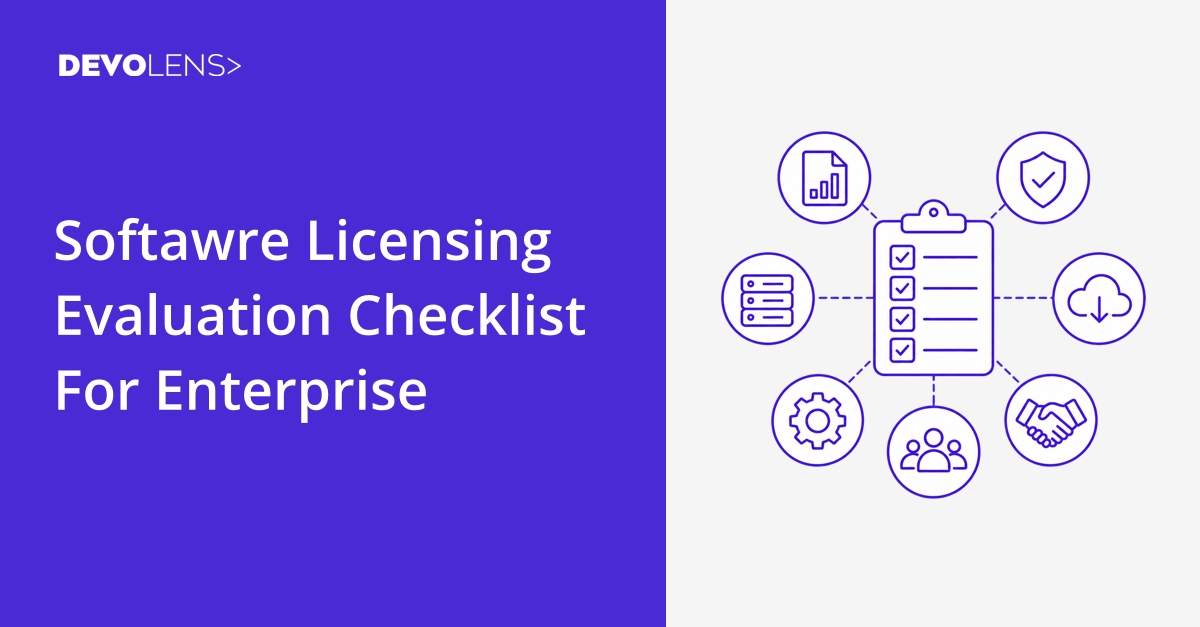
Enterprise Software Licensing Evaluation Checklist
Choosing a software licensing system for an enterprise product is more than a question of whether it can generate and validate license keys. The licensing infrastructure may need to support different deployment environments, complex entitlements, multiple licensing models, and customers with strict security and operational requirements.
A structured evaluation can help identify limitations before they become difficult or expensive to address.
Licensing Models and Entitlements
Start by looking at whether the licensing system supports the commercial models your software uses today and may need in the future.
Consider whether the platform supports:
- Node locked licensing
- Floating or concurrent licensing
- Subscription licensing
- Perpetual licensing
- Usage based licensing
- Feature based entitlements
- Activation limits
- Customer specific licensing rules
You do not necessarily need every model. The important question is whether the system can represent your actual commercial model without requiring significant custom development.
For an overview of the different approaches, see our guide to software licensing models.
Application Integration
The licensing system needs to fit into the application architecture rather than becoming a separate process that developers and customers have to work around.
Check whether the provider offers:
- APIs and SDKs for your programming languages
- Straightforward license activation and validation
- Secure communication between the application and licensing infrastructure
- Support for feature and entitlement checks
- Appropriate authentication mechanisms
- Documentation that developers can use without extensive vendor assistance
It is also worth testing the integration yourself. A provider may appear to support your technology while the actual implementation requires unexpected work.
For a more detailed look at activation specifically, see how software license activation works.
Deployment Requirements
Enterprise software is often deployed in environments that differ substantially from a typical cloud connected application.
Ask whether the licensing system can support your customers' actual environments, including:
- Internet connected applications
- On premise deployments
- Restricted networks
- Offline environments
- Air gapped environments
- Customer managed infrastructure
If customers cannot reliably connect to an external licensing service, offline licensing or a license server may be required. Devolens, for example, provides offline licensing and a license server for different restricted and controlled deployment scenarios.
Security
Licensing infrastructure can become part of the security boundary of your application, particularly when it controls access to valuable software or sensitive functionality.
Evaluate how the provider handles:
- Authentication and authorization
- License data
- API credentials
- License validation
- Signed licensing information
- Customer data
- Security monitoring and operational processes
Enterprise procurement may also require formal security documentation and certifications. Check what the provider can provide during your evaluation rather than assuming that security information will be available later.
For example, Devolens is ISO/IEC 27001:2022 certified for the development and operation of SaaS services for software licensing.

Reliability and Failure Handling
Licensing can become a critical dependency once it controls whether customers can access your software.
Ask what happens when:
- The licensing service is temporarily unavailable
- A customer loses Internet connectivity
- An activation request fails
- A license expires
- A machine is replaced
- A customer reaches an activation limit
The most important question is not simply whether a provider advertises high availability. It is how the application behaves when something goes wrong.
Local validation, offline licensing, and appropriate caching or license server architectures can reduce the impact of connectivity problems.
Scalability and Operations
The licensing system should be able to grow with your products and customers without creating an increasing administrative burden.
Consider whether you can:
- Automate license creation
- Provision licenses from your existing systems
- Update entitlements programmatically
- Manage large numbers of customers
- Support multiple products
- Delegate administrative responsibilities
- Monitor licensing activity
Automation becomes particularly important when licensing is connected to sales, billing, customer management, or support workflows. A system that requires manual administration for every license can become a significant operational burden as the customer base grows.
Vendor and Support Requirements
Technical capabilities are only part of the evaluation.
For an enterprise deployment, also consider:
- How long the provider has operated its licensing infrastructure
- Production experience
- Support response times
- Service level agreements
- Implementation assistance
- Documentation quality
- Communication during incidents
- How the provider handles larger or more complex requirements
It can also be useful to speak with the provider's technical team before making a decision. This can reveal how much assistance is available when the standard integration does not completely match your requirements.
Migration and Long Term Fit
If you are replacing an existing licensing system, evaluate the migration itself rather than only the replacement platform.
Consider how existing licenses, customers, activations, and entitlements will be transferred. You should also determine whether customers can be migrated progressively rather than requiring a single large change.
A licensing platform should also fit the direction of your product. If you expect to introduce new products, licensing models, deployment environments, or more complex entitlements, consider whether the system can accommodate those changes without another migration.
Enterprise Software Licensing Evaluation Checklist
Before selecting a licensing provider, you should be able to answer the following questions:
Licensing
- Does it support the licensing models we need?
- Can we manage features, limits, and customer specific entitlements?
- Can licensing requirements evolve as our products change?
Integration
- Does it provide suitable APIs and SDKs?
- Can our applications validate licenses securely?
- Can licensing connect to our existing business systems?
Deployment
- Does it support our customers' deployment environments?
- Can it work without continuous Internet access?
- Is a license server available if customers require local infrastructure?
Security
- How is licensing information protected?
- How are API credentials and administrative access handled?
- What security documentation and certifications are available?
Reliability
- What happens when the licensing service is unavailable?
- Can applications continue operating during connectivity problems?
- What operational commitments does the provider make?
Operations
- Can license administration be automated?
- Can the platform support our expected customer and product volume?
- Can our team manage licensing without excessive manual work?
Vendor
- How much production experience does the provider have?
- What support is available?
- Can the provider assist with implementation or migration?
Evaluate the System Before You Commit
The best way to evaluate a licensing platform is to test it against the requirements of your actual product.
A proof of concept can reveal integration problems, deployment limitations, unexpected administrative work, or gaps in the licensing model before they affect customers.
The evaluation should ultimately consider the complete licensing environment rather than one feature in isolation. Licensing models, application integration, deployment, security, reliability, operations, and long term support all contribute to whether a licensing system is suitable for enterprise software.
For a broader discussion of these considerations, see our guide on how to choose a software licensing provider.
Get Started with Devolens
Deploy licensing with a leading software licensing provider without long implementation cycles or added operational overhead.