Subscription Pricing for Software Products: When It Makes Sense and How It Works
Subscription pricing has become one of the most common commercial models for software products. Rather than paying once for permanent access, customers pay recurring monthly or annual fees to continue using the software.
For many software companies, subscriptions create a closer relationship between the product and the customer. Instead of a single purchase, the software continues to evolve through new releases, support, and ongoing improvements while the licensing system continuously enforces access.
Subscriptions are not the right choice for every product, but for many commercial applications they provide a balance between predictable revenue, operational flexibility, and a better customer experience.
This article explains when subscription pricing makes sense, what it enables from both a business and technical perspective, and how it fits alongside other modern licensing models.
What Is Subscription Licensing?
A subscription license gives customers access to software for as long as their subscription remains active.
When a subscription expires or is cancelled, the licensing system determines what should happen next. Depending on the product, that may involve restricting access entirely, disabling premium functionality, or allowing a limited free version to continue operating.
Unlike perpetual licenses, where customers purchase ongoing access with a single payment, subscriptions continuously validate that the customer remains entitled to use the product.
If you're looking for a broader overview of commercial licensing approaches, see our introduction to software licensing models.
When Does Subscription Pricing Make Sense?
Subscriptions work particularly well when software continues to deliver value over time rather than through a single purchase.
They are commonly used when:
- The product receives continuous updates and new features.
- Customers rely on ongoing support and maintenance.
- Cloud services or hosted infrastructure create recurring operating costs.
- Long-term customer relationships are important.
- New functionality is released regularly.
Many commercial SaaS products naturally fit this model, but subscription licensing is also widely used for desktop software, engineering applications, SDKs, and enterprise software.
The goal is not simply to charge customers every month. Instead, subscriptions align the commercial relationship with software that continues to evolve after the initial purchase.
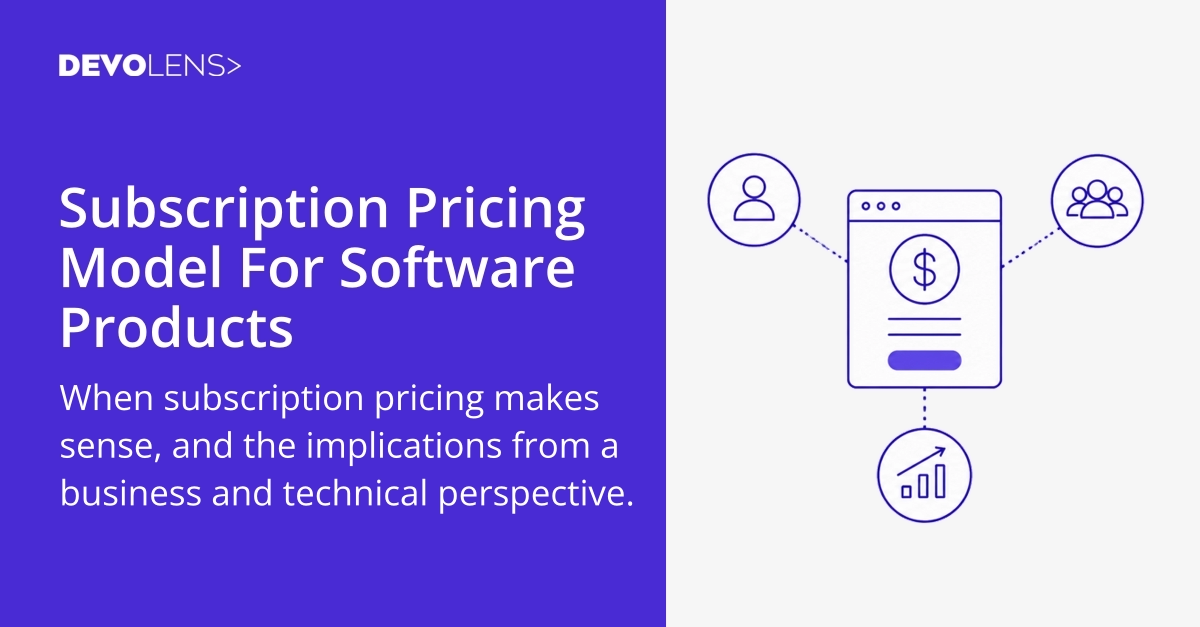
How Subscription Licensing Shapes Your Product
Choosing subscriptions affects more than pricing. It also influences how software is licensed and managed throughout the customer lifecycle.
A licensing system typically needs to support workflows such as:
- Activating new subscriptions.
- Automatically renewing customer access.
- Restricting access when subscriptions expire.
- Upgrading or downgrading customers between plans.
- Managing feature entitlements.
- Synchronizing licensing with billing systems.
Keeping these responsibilities separate from the application itself makes it easier to evolve pricing and commercial offerings without repeatedly changing product code.
Feature-Based Pricing Naturally Fits Subscription Licensing
Subscriptions are often combined with feature-based pricing.
Instead of offering a single subscription, companies commonly create multiple plans that expose different capabilities.
For example:
- Basic
- Professional
- Enterprise
Each plan grants access to a different set of licensed features while the licensing system enforces those entitlements inside the application.
This allows organizations to introduce new capabilities over time without maintaining separate product versions, while customers can move between plans as their requirements change.
Subscriptions Are Often Combined With Other Licensing Models
Subscriptions are one of the most popular commercial models, but they are rarely the only option.
Many software products combine subscriptions with other licensing approaches depending on how customers receive value.
For example:
- Feature-based subscriptions allow customers to unlock additional functionality as their needs grow.
- Floating licenses are often combined with subscriptions for engineering software and team environments where organizations pay for a fixed number of concurrent users.
- Usage-based pricing may be a better fit when value is closely tied to consumption rather than ongoing access.
The right commercial model depends on the product, the customer, and how value is delivered. Subscription pricing is often an excellent starting point, but it should be viewed as one option within a broader licensing strategy.
Operational Considerations
Subscriptions introduce operational requirements that extend beyond recurring billing.
Engineering teams need infrastructure capable of handling situations such as:
- Failed payments.
- Subscription renewals.
- Customers changing pricing plans.
- Feature entitlement updates.
- Customer cancellations.
- Offline validation when internet access is unavailable.
As products grow, these workflows often become increasingly automated to reduce manual administration and provide a more consistent customer experience.
Implementing Subscription Licensing
Implementing subscription licensing requires more than periodically checking whether a customer has paid.
A licensing platform must reliably validate active subscriptions, enforce feature entitlements, synchronize with billing events, and apply licensing rules consistently across customer environments.
Modern licensing platforms separate these responsibilities from application logic, allowing engineering teams to focus on building their product rather than maintaining licensing infrastructure.
If you're also evaluating how software licensing fits into your product architecture, our guide explaining what a software licensing system does provides a broader overview.
Final Thoughts
Subscription pricing has become one of the most widely adopted commercial models because it aligns well with software that continues to deliver value over time.
Beyond creating recurring revenue, subscriptions make it easier to continuously deliver new functionality, manage customer entitlements, and adapt commercial offerings as products evolve.
They are not the right choice for every software product, nor are they the only modern licensing model. Floating licenses, usage-based pricing, perpetual licenses, and other approaches each solve different commercial challenges.
The most effective licensing strategy is the one that reflects how customers receive value from your software while giving your engineering and commercial teams the flexibility to support future growth.

Get Started with Devolens
Deploy licensing with a leading software licensing provider without long implementation cycles or added operational overhead.