Why Choose a Cloud-Based Software Licensing Platform?
Software licensing has evolved significantly over the past decade.
Modern software products rarely remain static after release. Pricing models change, new features are introduced, enterprise customers require different deployment options, and licensing increasingly becomes part of the product's operational infrastructure.
As these requirements grow, many software companies move from internally managed or standalone licensing solutions to cloud-based licensing platforms.
This article explains what a cloud-based software licensing platform is, why many organizations choose this architecture, and when it makes sense to adopt one.
What Is a Cloud-Based Software Licensing Platform?
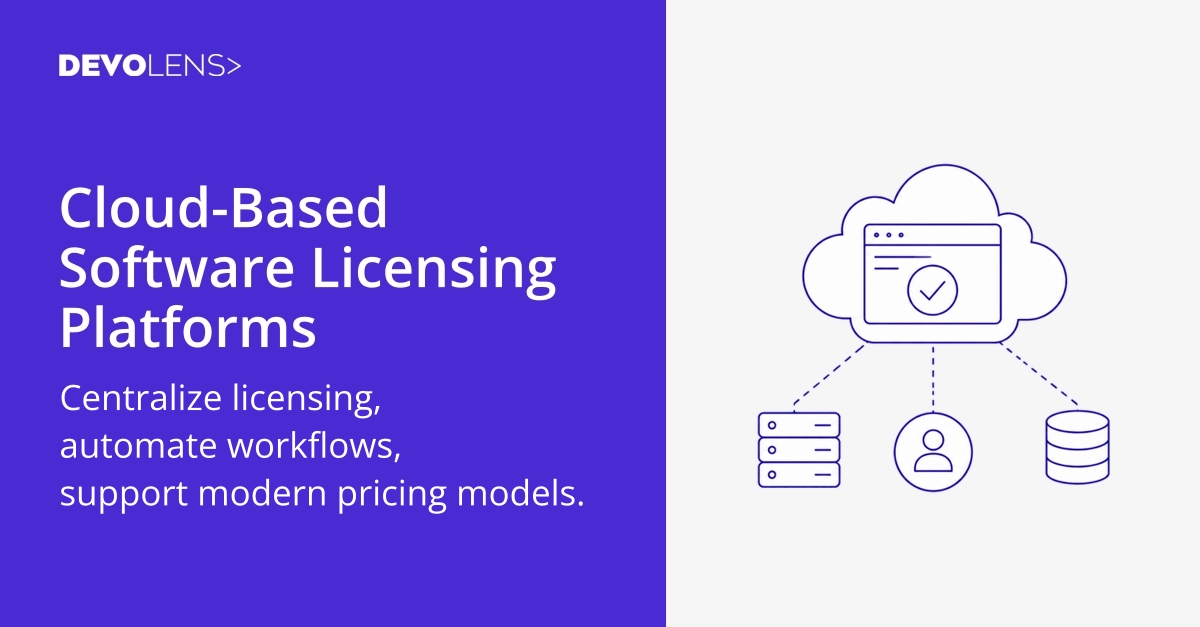
A cloud-based software licensing platform centralizes licensing management through an online service.
Instead of managing licensing information separately across individual customer installations, the platform maintains licensing data in one place while applications validate licenses, retrieve entitlements, and synchronize licensing information as needed.
Depending on the product, this may include:
- Customer licenses and entitlements.
- Product editions and feature access.
- Subscription status.
- Usage information.
- Device activations.
- Operational licensing data.
Rather than embedding every licensing workflow directly into application code, the licensing platform becomes dedicated infrastructure that supports commercial software throughout its lifecycle.
If you're looking for a broader introduction to software licensing itself, our guide explaining what a software licensing system is provides additional background.
Centralizing Licensing Operations
One of the biggest advantages of a cloud-based licensing platform is that licensing operations become centralized.
Instead of maintaining licensing information across multiple systems, engineering and commercial teams work from the same source of truth.
This makes it easier to:
- Manage customer licenses.
- Update product entitlements.
- Support multiple products and editions.
- Track licensing activity.
- Maintain operational consistency.
As organizations grow, centralized licensing often becomes significantly easier to manage than maintaining independent licensing workflows within each application.
Separating Commercial Decisions from Product Releases
Commercial software evolves continuously.
Pricing changes.
New editions are introduced.
Enterprise customers request custom licensing arrangements.
Without dedicated licensing infrastructure, many of these commercial changes require engineering work and product updates.
A cloud-based licensing platform separates many of these licensing decisions from the application itself.
This allows organizations to introduce new licensing rules, update customer entitlements, or launch new commercial offerings with significantly less impact on application code.
For companies that expect their pricing strategy to evolve over time, this separation often becomes one of the most valuable aspects of cloud-based licensing.
Supporting Modern Pricing Models
Commercial software is no longer sold using a single licensing approach.
Many organizations support multiple pricing models simultaneously depending on the product and customer.
Cloud-based licensing platforms make it easier to manage approaches such as:
- Subscription licensing.
- Usage-based pricing.
- Floating licenses.
- Feature-based licensing.
- Perpetual licenses.
Because licensing rules are managed centrally, organizations can adapt commercial offerings without repeatedly redesigning their licensing infrastructure.
Better Visibility Into Licensing Operations
Modern licensing platforms provide more than license validation.
Because licensing activity is managed centrally, organizations gain greater visibility into how licensing operates across customers and products.
Examples include:
- Active customer licenses.
- Device activations.
- Product usage.
- Validation activity.
- Subscription status.
- License utilization.
These operational insights help engineering, product, and commercial teams better understand how licensing supports the business while making it easier to investigate customer issues when they occur.
Automation and AI
Cloud-based licensing also enables greater automation.
Rather than manually creating licenses, updating customer plans, or managing renewals, many workflows can be driven automatically through integrations with payment systems, business applications, and APIs.
Learn more in our guide to automating software licensing.
As licensing platforms continue to evolve, AI is becoming part of these operational workflows as well.
Because licensing data is managed centrally, AI can help summarize licensing activity, investigate validation issues, identify unusual usage patterns, and assist with repetitive administrative tasks.
Some platforms also allow AI agents to securely interact with licensing infrastructure through technologies such as Model Context Protocol (MCP), allowing operational tasks to be performed through controlled, permission-based interfaces.
What About Offline Software?
Choosing a cloud-based licensing platform does not necessarily mean every customer must remain permanently connected to the internet.
Many commercial products operate in environments where continuous connectivity is unavailable or prohibited.
Examples include:
- Industrial environments.
- Enterprise networks.
- Secure facilities.
- Air-gapped deployments.
- Engineering workstations.
Modern cloud-based licensing platforms often support these scenarios through offline validation methods such as license files or dedicated license servers, allowing organizations to centralize licensing management while continuing to support offline customers.
Our guide to offline software licensing explains these approaches in more detail.
Choosing a Cloud-Based Licensing Platform
Organizations generally have two options.
They can build and maintain cloud-based licensing infrastructure internally, or they can adopt a dedicated licensing platform.
Building internally provides complete control but also requires long-term ownership of licensing infrastructure, integrations, operational workflows, and ongoing maintenance.
Dedicated licensing platforms provide this infrastructure as a managed service, allowing engineering teams to focus on developing the product rather than maintaining commercial licensing systems.
If you're evaluating external platforms, our guide to choosing a software licensing provider discusses the technical and business considerations that are worth evaluating.
Final Thoughts
Cloud-based licensing is not simply about moving licensing to the cloud.
It is about treating licensing as dedicated operational infrastructure rather than embedding every licensing workflow inside the application itself.
By centralizing licensing management, organizations gain greater flexibility to evolve pricing models, automate commercial workflows, support enterprise deployments, and better understand how licensing operates across their products.
For many commercial software products, that flexibility makes cloud-based licensing a natural foundation for long-term growth while still allowing offline deployments where they are required.
Get Started with Devolens
Deploy licensing with a leading software licensing provider without long implementation cycles or added operational overhead.